30 Oct 2015

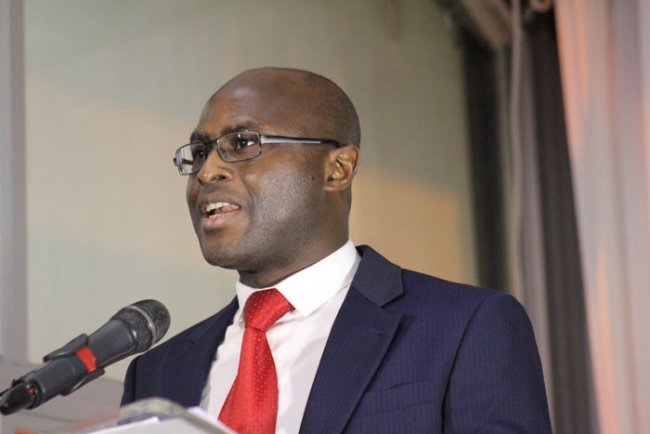
Pakamile Kayalethu Pongwana, CEO ICASA, to speak at AfricaCom

Pakamile Kayalethu Pongwana, Chief Executive Officer at South Africa's converged regulator ICASA,  will join a Regulatory Panel at AfricaCom on Tuersday 17th November.

The panel discussion, hosted by Internet Society, will examine the role of regulators and governments in boosting connectivity across Africa. Among the topics to be addressed will be the importance of national broadband plans, infrastructure sharing, last mile access, taxation, spectrum, universal service funds and investment.

Pakamile joined ICASA as CEO in November 2013. Prior to this, he has held roles in the South African National Defence Force, the Department of Communications, and Vodacom.

For more information on the AfricaCom programme, click here.


Africans Are Mobile, What About Your Website? africa.com proud Media Partner of AfricaCom


From accessing mobile money services, to messaging, ordering a taxi (or takeaways), and not forgetting calling - the mobile device has become one of the most important tools to millions of Africans on the continent. In a study of the Sub-Saharan consumer market, Ericsson’s Mobility Report shows that users in the region have shown a preference for using their device for a variety of activities that are normally performed on laptops or desktops, with seventy percent of mobile users in the sampled countries browsing the web on their devices, compared to the 6 percent who use desktop computers. They attribute this trend to the relatively low cost of mobile phones which means it’s accessible to consumers, especially those from the rising middle-class.

In other words, if you’re an SME in Africa without a mobile optimized website, you’re missing out. GeoPoll and World Wide Worxs’ recent Mobile Africa 2015 study shows that internet browsing via mobile phones stands at 40 percent. This is based on surveys in five African countries - Ghana, Kenya, Nigeria, South Africa and Uganda. More than 50 percent of participants questioned in Ghana say they use their mobile phones to access the internet. In Nigeria it’s 47 percent, South Africa 40 percent, Kenya 34 percent, and Uganda just under 30 percent.

Globally, the number of people using the mobile internet reached close to two and a half billion at the end of last year. GSMA’s Mobile Economy Report predicts that growth in developing countries will help push this up 3.8 billion mobile internet users by 2020.  

What does this all mean for you? You already have a website. You love your website. It looks great on a desktop. But remember that while your website might look great on a desktop, chances are it does not translate the same on mobile. The first step is to TEST the current mobile friendliness of your site. Still not convinced? Read on for three reasons to mobile-optimize your site.


YOU WANT AN EDGE OVER YOUR COMPETITION: 

A mobile optimized site will help generate more traffic, boost customer engagement, which in turn will lead to increased sales. In a global survey of 4,800 SMEs, McKinsey & Company found that “across all sectors, companies utilising Web technologies grew more than twice as fast as those with a minimal online presence, generating more revenue through exports and creating more jobs.” The full “Lions go Digital” report that focuses on the internets’ transformative potential in Africa can be found HERE .

IMPROVED USER EXPERIENCE: 

A visitor should be able to navigate around your site with ease. You don't want to have them scroll from left to right to view full contents, or zooming in just to be able to read the text. The better the experience, the longer they are likely to hang around, increasing the chances of  stay converting them from visitor to customer. A mobile optimized site also means faster speed. Who has the time (or patience) to wait for a page to load? Some research reports showing that close to 60 percent of mobile users will abandon your site if it takes more than 3 seconds to load. Other are are more generous, saying users will wait up to 10 seconds before logging off.

GOOGLE WANTS YOU TO: 

Earlier this year Google launched a new algorithm that favours mobile-optimized sites. Sites optimized for mobile devices rank higher when you do a Google search on your phone, meaning more people will be able to find you. In explaining the change, Google said it was doing it to help users “find it easier to get relevant, high quality search results that are optimized for their devices.”

There’s the wrong perception that creating a mobile optimized site is expensive. A number of service providers - including go.Africa.com - have made it super easy and affordable for anyone to get their business online in Africa. With mobile internet usage on the continent expected to increase 20-fold over the next five years (that’s double the rate of growth in the rest of the world!) having a site that’s not mobile-optimized just does not make sense.


29 Oct 2015

Cisco to Champion SDN and Virtualisation Technologies at AfricaCom 2015


Cisco to Champion SDN (Software Defined Networking) and Virtualisation Technologies at AfricaCom 2015

Cisco Sponsors Event’s Inaugural Dedicated SDN & Virtualisation PoCs Theatre

Johannesburg, October 2015: With less than a month before the much anticipated AfricaCom 2015 begins, exhibitors and sponsors are preparing to deliver a host of exciting activities, talks and presentations to the 10,000 expected delegates. Scheduled to take place between the 17th and 19th November at the Cape Town International Convention Centre, this year’s event theme will be innovation, transformation and leadership for digital Africa.
 
Paolo Campoli, Cisco
This year Cisco will be sponsoring the inaugural SDN (Software Defined Networking) & Virtualisation PoCs theatre at AfricaCom 2015 in a bid to show their commitment to fostering an entire ecosystem of young programmers, talents and partners in Africa. Cisco will also use the new platform to demonstrate the benefits of SDN in enabling African operators to accelerate application deployment and delivery as well as dramatically reducing IT costs in a practical, hands-on way.

 A full programme of demonstrations will be scheduled to take place at the SDN and Virtualisation Theatre throughout the show’s 3 days. The theatre will also act as a networking area for visitors. Paolo Campoli, Head of Middle East & Africa Global SP Sales and SP CTO for the MEA Sales Region at Cisco says, “Cisco is sponsoring the SDN Theatre at because in Africa, we’re already seeing strong demand for SDN from industries with complex networks that need to quickly process large amounts of data and this includes Service Providers in particular.”

In addition to a full schedule of PoC demos throughout AfricaCom within the theatre, visitors can also look forward to innovative and insightful keynote addresses around innovating for Africa’s digital future, new digital models and sustaining profitability in Africa.

“In the wake of the digitisation era, Cisco’s NFV (Network Functions Virtualisation) architecture will help African Service Providers to transform their networks to prepare for the new wave of the internet and IoT. We have combined NFV with two complementary technology initiatives namely Open Source to help free an organisation’s technical talent to innovate and SDN which is enabling them to accelerate application deployment and delivery whilst dramatically reducing IT costs,” says Campoli.

“SDN also enhances the benefits of data center virtualisation, increasing resource flexibility and utilisation and reduces infrastructure costs and overhead and enables network programmability and code development to bring applications and networks closer. The result is a modern infrastructure that can deliver new applications and services in minutes, rather than days or weeks required in the past delivering with a platform capable of handling the most demanding networking needs of today and tomorrow,” concludes Campoli.
NFV and SDN offer new ways for telecom operators to design, build, operate and manage information networks. Experts at the 2015 AfricaCom Conference will unpack these very hot topics which are sure to generate some intense discussion.


For more details about Cisco Software Defined Networking visit: http://www.cisco.com/web/solutions/trends/sdn/

About Cisco:
Cisco (NASDAQ: CSCO) is the worldwide leader in IT that helps companies seize the opportunities of tomorrow by proving that amazing things can happen when you connect the previously unconnected. For ongoing news, please go to http://thenetwork.cisco.com
# # #
Cisco and the Cisco logo are trademarks or registered trademarks of Cisco and/or its affiliates in the U.S. and other countries.  A listing of Cisco's trademarks can be found at www.cisco.com/go/trademarks. Third-party trademarks mentioned are the property of their respective owners. The use of the word partner does not imply a partnership relationship between Cisco and any other company.


28 Oct 2015

“Operators must quickly identify and accelerate adoption of new trends” Interview of Thomas Vasen, Procera

Thomas Vasen is Subscriber Experience Evangelist at Procera Networks. He will be speaking on strategies to monetize data at AfricaCom next month. He shares his insights on the market in an interview ahead of the event.

AfricaCom: What is Procera’sposition in Africa’s market?
Thomas Vasen: Procera is an established player on the continent with deployments by mobile operators, fixed ISPs and local governments. We offer a wide variety of platforms to ensure that we have a suitable solution for everyone. Customer use-cases are primarily focused on controlling traffic on the network, but peering traffic management and fair-usage policies are gaining popularity. We have also noticed that emerging market operators are focused on maximizing the subscriber experience. They take a more proactive approach to improve customer satisfaction and, as a result, we are seeing increased demand for the solutions we offer.

A: What do you think will be this year’s most game-changing development in Africa’s telecoms?
TV: Perhaps a real attractive internet.org alternative will emerge that will drive users to become more interested in mobile Internet usage. Operators must start to develop new skill sets to successfully grow and should focus on value-added services, such as micro packages for specific value and OTT services.
But the biggest driver for growth will be the availability of affordable, but rich enough, handsets.

A: What services will enable telecom operators to generate revenue from data?
TV: Operators need to stick to a usage-based pricing model and find ways for users to start using more data. It is important to have sufficient coverage and network quality in relevant places and remind subscribers of the services that are available to them.
The key for operators is not to invent services, but to quickly identify and accelerate adoption of new trends. Operators need tools to monitor the network and understand traffic to be able to grow. A great strategy is to launch app specific data packages for those users who cannot afford general data bundles at an affordable price point. In addition, any services that facilitate trade of some sort will be attractive for users.  

A: What do you estimate as the most pressing communications needs for customers in Africa?
TV: The intercontinental cables have always been a scarce resource in Africa. OTT service providers from North America or Europe will not be able to deliver the highest of quality services simply because of the long distance between the continent and their data centers. Local cashing solutions offer a short-term remedy until more global transit capacity is available at affordable rates.

A: What aspect(s) of the customer experience should operators make a priority in Africa?
TV: There is a lot of talk about the experience of the onboarding and the support process in Europe. I recommend focusing on the quality of services delivered instead. Make sure that services are fully functional in all locations on the first attempt enabling customer to immediately benefit. It’s not only about having coverage; it’s about providing enough bandwidth and high enough quality of experience in the right locations.

A: What tools should operators use to enhance customer loyalty in Africa?
Delivering good quality is the foundation to earn loyalty. Even though there will be fierce price battles to attract the lower classes online, those consumers will be very sensitive to their quality of experience given the expense in relation to income levels. Their expectations need to be exceeded before loyalty can be created.

A: In your opinion what are the most interesting debates to expect at AfricaCom this year?
TV: How is NFV helping the region to become more forward thinking, move to a newer generation network right away, and offer advanced control of services to maximize new business growth?
I am also interested in any discussions on Net-Neutrality. I admit that I’m not fully up-to-date across all of the regions, but I’d like to learn more about the rapid changes I see taking place here and in other emerging regions like India.


Thomas Vasen’s presentation will take place in the session on New Revenue Streams on Wednesday 18th November at AfricaCom. For more information on the programme click here

Four technologies that telecom operator dreams are made of


Once upon a time, people commonly used payphone booths, party telephone lines and rotary dial phones, but by 2000 and forward, those three have become mostly just cool things that hipsters talk about. From the moment mobile devices began to grace the telecommunications scene, people and the organizations they associate with have embraced their convenience, fashion statement, cost savings, gradual elimination of long distance, "take your phone number with you no matter where you go" empowerment and more. As a result of this revolution, some telecom operators flourish and others flounder.

Pew Internet shares that as of January 2014, 90 % of all American adults and 34 % of all South African adults own smart phones. South Africa and other African nations hold great potential for innovative telecommunications operators because of the low penetration to this point. A Nielsen report shows there has been an 89 % increase in mobile data usage with global mobile data usage predicted to grow 13 times from 2012 to 2017!

These facts demand respect. It seems inevitable that telecommunications industry would see just as big revenues. Why has voice and messaging revenue, in fact, declined by as much as one billion USD each month when comparing 2012 to 2011? The decline is predicted to get worse. When the going gets tough, the tough start observing and listening to customers and innovating services and products that show they are observing and listening.

With as many as 35 % of USA adults still predicted to finally welcome a smart phone as a necessity and the other 66 % of South African adults doing the same with smart phone or any kind of cell phone, that means as much as 35 - 66 % more voice and data revenue, and more telecommunications carriers and operators have the option to plan, prepare and execute action to capitalize. Be specific, right?

Telecommunications companies have access to probably the most data in the world, past, present and future. Productive analyses of that data and proper and enabling action to meet the needs of customers can help to gain and retain customers. To not only gain but also retain is an operator's dream come true. What makes the customers tick? Now telecoms have no reason to not know. Conferences such as Africa Com bring together those data mining experts together with operators to make the most of data, one of the dozens of ways to be more innovative and realize growth in revenue and customer happiness.

New, emerging markets such as in Africa, China, India and Brazil are said to hold at least 85 % of the telecommunications industry's growth between 2013 and 2017, but this is in mobile phone and service technology, not fixed telephony. No wonder the same countries have scores of entrepreneurs; families of students studying in USA, Europe, Japan and Australia; small businesses and nonprofit as well as governmental organizations who are choosing to own virtual phone lines or virtual phone numbers outside of their nation. They are at the cusp of extreme innovation and something way bigger than the 1999 DOT COM peak. Their potential for growth is not determined by traditional legislative and geographic boundaries. They can have a virtual local presence in the most fully developed nations where their "VIP" (very important people) such as current and potential customers, vendors, partners, family, and friends live, work and play…all because of something as commonplace as a local phone number. Telecom operators and service providers that are aware of such opportunities can gain those people as customers and retain them just by joining a wholesale DID phone number marketplace and getting involved in the buy, sell, trade opportunity.


Next, with near field communication and other contactless protocols and technologies, mobile money is the new exchange process and another way to see bigger revenues. Thousands of telecommunications related companies and entrepreneurs were enthralled with case studies to prove these facts at ITEXPO West in October 2015. The perfect follow up is participation in Africa Com November 2015 in Cape Town that attracts the experts who serve mobile payment users and providers in Africa and elsewhere. These are places where mobile money is used because traditional currencies just like traditional telephones are not practical and maybe even not available. No wonder AfricaCom will make available those experts to educate the rest of us from their vast and deep experience with mobile money opportunities. What is needed to make it work? Create apps that can be enabled by NFC (near field communications.) What is that? They make it more convenient to sell and buy, for example, via a barcode or a tap and so on.

Consumers and small businesses drive the commercial world. Such is true with, for example, transportation, communication, commerce, and the "Internet of Things." A boss sends a Q & A beacon to one of his most industrious team members after that person states, "I wish I could just ask a question to thin air and get the answer right away." A business lady prepares for an important business meeting with a prominent Japanese company and says, "Ok, Google. What is proper Japanese business card etiquette?" Nearly every new car in South Africa has an M2M connection with a goal to combat car theft. Utilities companies use M2M to track energy consumption. Vending machines, kitchen cupboards and refrigerators "automatically update" their vending sources with replenishment requests. Who stands to benefit with increased revenues from such? The companies…that set up the stage to create the apps, that sell the devices, and that provide the backbone of the routing of the services…are the telecommunications operators.

So, in summary, data access, analysis and empowering action; mobile devices and services; virtual phone lines; near field technologies, mobile money and payments; and the Internet of Things are the stuff that telecommunications operators' dreams are made of. With the fast and growing embrace of cloud services, virtual private networks and hosting, B2B and the markets they serve save more money, make more money and create and enjoy more innovation. Telecommunications companies have earned their place in the middle and as the foundation of these freedoms and breakthroughs.


While the old ways that telecommunications operators made money are slipping away, new, very practical and empowering ways are taking their place, and consumers as well as B2B are driving this change. Observe, listen and act!

By Suzanne Bowen, VP DIDX.net (technology media partner and wholesale telephony marketplace provider)

27 Oct 2015

How are you paving your road to be a digital world leader in Africa


By 2020, more than seven billion people and businesses, and at least 30 billion devices, will be connected to the Internet.


Predictions on the future of digital consumption no longer shock me and as an enterprise leader, it shouldn’t shock you either. Business IT professionals own a minimum of three devices connected to the internet viz. mobile, tablet and laptop - it’s not a statistic I pulled from a survey, but rather my own observation at every ICT conference I’ve attended in the last 12 months, including AfricaCom 2014 and VAS Africa 2015.

At the VAS Africa 2015 conference, Nevo Hadas, a partner at & Innovation shared his insight on how to strategically ensure that you and your business remain relevant in the digital age. His core message was “People are the digital economy”. Whether we like it or not, the digital business model has landed, and will be grounded for as long as technology evolves and there is a need to develop solutions that drive business efficiency, increase sales and essentially make your business more relevant in today’s digital age. Just as your customers are at the core of your digital innovation sales strategy, so too should your team be.

If your business is offering technology solutions for other businesses to stay ahead of competition, my question is - what are you offering your team to ensure your product stack is not ten steps ahead of your internal digital evolution? Has your business model shifted to complement the pace at which digital disruption is leading change in the workplace? How often do you check in with your staff about the tools they use, or if they have any ideas on how to enhance existing resources to embrace digital disruption the same way we adjust budgets to embrace annual inflation?

Leading digital innovation with your team


This recent article published in Computerworld, The 5 critical pillars of innovation management capability by Nicholas D. Evans - author of a number of books including Business Innovation & Disruptive Technology: Harnessing the Power of Breakthrough Technology…for Competitive Advantage - provides deeper insight on steps to take as you assess and manage innovative change affecting your business internally and externally. Evans specifically notes that “To get everyone on the same page across your organisation, since ‘innovation’ typically means different things to different people, it’s important to come up with precise terminology for innovation and to clearly spell out initiatives, roles and responsibilities to avoid duplication of effort or competition among internal groups.”

On what level have you discussed or included your core team in the meaning of digital and innovative change within your business? In order for you to be part of a dynamic shift in Africa and to be a leader of digital change on the continent (one of the core tracks at AfricaCom 2015) relevant to our context, it’s essential to ask strategic questions that will unlock the creative juices within your team. Each individual within your organisation - from front desk to top director - has something to offer.

Listening to ideas on the ground for effective, innovative change


In the September issue of Forbes Africa Women, Nkosazana Dlamini-Zuma, the first female chairperson of the African Union Commission, notes that as plans were coming together for the AU’s Agenda 2063 (a 50 year vision for Africa) women farmers noted that a 50 year vision would mean nothing to them if the hoe (a tool used in agriculture) is still used to till the soil. I found it a fitting metaphor for thinking about digital tools used by your team, as you expect innovative change within your business.

Your team is essentially responsible for ‘tilling the soil’ within your business from which new, innovative product offerings grow and creative ideas sprout. Have you consulted with your team on how effective existing tools are and are you listening to their feedback?

In this age of digital disruption, the tools we use to implement change in the technology sector directly impacts the rate at which change takes place. Let’s not forget that acquiring the latest digital tools/ software is not the immediate answer, I'm referring to a resource audit. Having just replaced my laptop from an Apple operating system to Windows, a new interface and desktop apps can be intimidating or cause a migraine if not implemented as part of a strategic shift and consultation with your team.

Are your digital campaigns impacting your bottom line?


The final point that I want to touch on is evaluating how you communicate the shifts in your business objectives to your team and customers.

As an enterprise decision maker, are you resisting communicating these shifts via digital communication channels? In a world where connectivity is the core of efficient, productive, relevant businesses - surely it makes business sense that your value proposition is reaching your target audience in multiple ways online? Not so obvious for most.

Once you allow yourself to embrace this significant digital shift in the enterprise right now - in the same way you allowed yourself to transition from feature phone to smartphone, from zero mobile apps to using at least three mobile apps a day - you will feel a weight lifting off your shoulders when you realise the impact digital campaigns can have on your bottom line.

The ecosystem is changing and will continue to evolve; your digital consumption, that of your customers and team has changed, it’s a blatant fact!


To overcome our biggest fear of no longer being relevant or offering relevant products to the world - WE NEED TO LEAD the digital change INTERNALLY! 


We’re proud to be a media partner for this year’s AfricaCom conference. As a digital PR consultancy servicing technology clients, it makes sense for us to partner with the leading digital and telecoms conference on the annual events calendar. This conference is core to our market and the customers we serve. It provides opportunities for knowledge sharing, business networking and industry peer meetings.

22 Oct 2015

Illegal Bypass - CSG


Illegal Bypass – a major threat to Mobile Operators and Licensed Gateways in Africa

Written by Robert Wiesheu CSG International

Fraud is a huge problem for mobile operators around the world, estimated to cause revenue losses of $46.3 Billion (USD) annually of total telecom revenues, according to the 2013 Global Fraud Loss Survey by the Communications Fraud Control Association (CFCA).

Illegal bypass termination is the single largest interconnect fraud issue, and in many countries, the international termination rate (ITR) is considerably higher than the local (retail) termination rate to a mobile number in the country. This makes it profitable to bypass the licensed international operator when terminating calls in the country so that the lower local rate is paid instead of the ITR. This practice is illegal in most countries and causes significant problems for many operators due to lost revenues.

For fraudsters, it’s only too easy to get started. Setting up a SIM Box (GSM gateway) is simple; standard equipment can be acquired easily enough over the internet. The calls are typically routed via an internet connection to the SIM Box residing in the terminating country that converts the call into a local mobile call. Another variant of illegal bypass is when fixed line equipment, a so called Leaky PBX, is used to convert the call to a local call.


Illegal Bypass - The scale of the problem in Africa

Fraudulent ‘SIM Box Termination’ of international incoming calls, also referred to as 'Carrier Bypass Fraud', is a major challenge for Mobile Network Operators (MNOs) and licensed International Gateway Operators (IGW), resulting in poor customer experience and consequent churn as well as lost revenue. It is estimated that in some countries as many as 70% of all incoming international calls are terminated fraudulently. The CFCA estimates in its report that USD $2 Billion are lost yearly due to SIM Box fraud alone. This not only impacts operators but also the tax authorities of the affected countries as taxes due on international traffic cannot be collected.

In Kenya, it is estimated that the government and operators lost in 2013 alone an average of US $440,000 per month due to fraudulent bypass activities. A similar picture can be painted in Ghana, where the government reported that SIM box fraud has cost them US $5.8 million in stolen taxes per year. Only in January 2015, an alleged SIM Box fraudster was arrested in Ghana who had 21,232 SIM cards from one of local operators in possession. The activities of the fraudsters had led to a revenue loss of $33 million dollars within a five to seven month period, police told the media.

Beyond direct revenue loss, other consequences of SIM Box Fraud include missing or incorrect Calling Line Identifier (CLI) as well as degraded voice quality both of which will lead to further revenue loss for the licensed operator.

Illegal Bypass – Fightback strategy

Bypass fraud is more prevalent in the countries where the cost of terminating an international call is higher than that of a national call. The most effective way to eradicate illegal bypass is therefore to harmonize international and national termination rates. However, this solution is as obvious as impractical, so operators are beginning to deploy solutions that tackle the problem from different angles: either pro-actively with test-call based systems or by capturing live traffic data in order to identify suspicious call patterns.

The most effective way to combat bypass fraud is to combine these solutions in a way whereby SIM Box numbers identified by the test call solution are used by the live traffic analysis tool to fine-tune the search patterns and to cut off any illegal numbers.

Using this technique, an operator in Northern Africa was able to make significant strides towards minimizing illegal bypass fraud in their network. The operator estimated that around 3% of their international incoming voice traffic was terminated illegally as a local call, and that their monthly losses accumulated to around $350k. Proactively identifying and blocking the illegal traffic therefore helped to halt revenue leakage in excess of $4 Million per year.


For more recommendations and best practices
on how to sniff out mobile fraud
visit us at AfricaCom stand P99
or download our white paper or learn more about call quality best practices here.


20 Oct 2015

“Innovation and customer experience are what keeps us relevant” Interview of Patrick Benon, CEO Orange Botswana

Patrick Benon is CEO of Orange in Botswana. He will be joining a keynote panel on targeting underserved communities at AfricaCom next month, alongside representatives of Facebook, Mozilla, Atlantique Telecom and Vodacom. 
He shares his experience of the challenges and opportunities in Botswana’s market ahead of the event.

AfricaCom: What is Orange’s position in Botswana’s market?
Patrick Benon: Orange Botswana is the leader in mobile money (Orange Money) in the country, commanding 65% of the mobile money market share. In totality, Orange has more than 1 million subscribers, occupying the second position in terms of voice and data market share. We believe in addressing and answering the ever changing needs and expectations of our customers by being at the forefront of cutting edge innovation and technology which is evident from the following;
·                     Being the first to introduce  4G technology in 2015
·                     Introduction of a Visa Card linked to Orange Money account in 2013,
·                     Being the only Operator  in Botswana to offer  airtime credit  
·                     And the latest innovation which is the launch of the Orange Money mobile application which allows easy access and management of Orange money account.

A: What makes Botswana a unique market to work in compared to others in Africa?
PB: In a lot of African markets, the mobile industry is still growing, however, in Botswana the mobile penetration stands at more than 150% of the population. The mobile market is mature with little to no prospects of growth and the voice revenue and traffic is on the decline. Even though the mobile penetration rate is high, the data market is only starting to grow, with penetration still below 50% of the population. In this sense the market presents a unique challenge which requires the operators to adopt both a growth strategy for data and a mature/declining strategy for Voice. Operators also have to seek alternative sources of revenue as data revenue is not yet growing to the extent to which it can replace the decline in voice revenue.
This has resulted in all the operators shifting their focus towards investment in high speed data and Value Added Services. The good news is that Botswana has an enabling regulatory environment which supports the operators’ ambitions of diversifying their business. The regulators have been able to allocate operators the required spectrum for them to launch high speed internet such as 3G and LTE as well as authorise the introduction of mobile money when other markets were still hesitant to embrace these technologies.

A: What have been you biggest challenges and best rewards since joining Orange Botswana?
PB: Clearly the biggest challenge is maintaining and growing the business profitability in a highly saturated market and finding alternative avenues of revenue to replace the legacy mobile business.
The country has been experiencing power shortages which affect the quality of the network. This has prompted operators to find alternative sources of energy to keep the services working during the power outages.
Rewards: Orange deployed LTE in record time with excellent quality of service.

A: How important is staff management in your business? 
PB: Creating a sustainable and conducive environment for staff is top priority for operators. As our biggest asset and productivity drivers, employees need the right frame of mind to deliver the best possible customer experience to our customers. They need to be motivated to understanding the importance of delivering excellent service, the impact it has on the business and to love what they do and be excellent brand ambassadors on a daily basis. Operators can easily achieve this through not only adapting to the right organisational culture but also through skill improvement and motivation for employees. It is why becoming an employer of choice is a top priority for us at Orange.
We experience skills shortages mainly on the IT and VAS side of business. As technology evolves it is important to re-skill our people through consistent training for them to be able to adapt to the new technology skill trends. Therefore, consistent, relevant, timely training is critical to maintain skills levels in the company. It is also important to establish training Partnerships with universities and colleges to create a pool of potential employees. 

A: What new technologies will bring most benefits to consumers and to operators?
PB:
-          Mobile money: 80% African population is said to be unbanked, so expanding services for mobile money by building a wider ecosystem and agent network will greatly benefit the consumers. Mobile money continues to prove its ability to close the financial inclusion gap and eradicate poverty amongst low income households. It’s an affordable, safe and convenient method through which the unbanked can fully enjoy financial services.  Even though opening up mobile money too many players needs firm regulation and monitoring to prevent fraud and money laundering I am of the view that this approach provides a profitable diversification strategy for operators with potential for growth and creation of highest stakeholder value.
-          Improved data speeds: Governments are striving for accessibility and affordable internet connectivity for citizens, more so that the traditional way of communication is rapidly shifting from voice and sms to data. It therefore becomes imperative for operators and government to review bandwidth capabilities as well as re-alignment of costs for data. The improvement and investment in data speeds and capacity such as LTE 4G will address needs of the modern African who heavily relies on data to function on a daily basis (for work, simple communication, productivity and even trade). Operators in turn will also benefit from this new revenue stream.

A: What are your priorities in terms of delivering excellent customer experience in Botswana?
PB: Delivering excellent customer service is a strategic priority for Orange Botswana. In this industry, it’s all about customer experience; from the moment a customer enters our service points to the quality of network coverage. In fact, both innovation and customer experience are what keeps us relevant, but best customer experience will help us keep our current customers and acquire new ones. It is for this reason therefore that we have deliberately put customer experience at the forefront of our 5 year organisation strategy.  
The new organizational strategy, simply termed Essentials 2020 is a global strategic plan for the Orange Group which kick-started this year and will run until 2020. To ensure delivery of this strategy, we have introduced a new Customer Experience Department, whose sole mandate is to look into ways of improving and enhancing customer experience within the whole company.

A: How can telecom operators support innovation within their company and within the wider ecosystem?
PB: Given the popularity and penetration for mobile phones, the world is now looking to telecom operators to support and cascade innovation to the population. Mobile devices have become important vehicles that can be used to provide innovative services. And operators have the right infrastructure and connectivity to facilitate innovation.
The opportunity here exists in various ways;
·                     Leadership through innovation by developing value added services that bring convenience and solve people’s everyday life challenges
·                     Partnering with innovators to provide inclusive technology for innovation
·                     Supporting and nurturing technology incubators with potential to completely shift way of doing things especially for service delivery
Some of the immediate technical assistance that operators can offer to bolster innovation is to provide integration into systems such as billing platforms for e-commerce and sms exchange platforms for those using sms to reach their clientele.  

 A: What do you think will be this year’s most game-changing development in Africa’s telecoms?
PB: The launch of LTE in African countries will change the African telecom landscape as more people will experience new internet speeds and capabilities that previous technologies couldn’t reach.
In terms of supporting other industries and having precise and personalized services, telecoms operators could take advantage of big data available to them for social behavior campaigns and marketing. 
On sustainability, I foresee e-waste management policies and reforms being implemented

A: In your opinion what are the most interesting debates to expect at AfricaCom this year?
PB: Customer experience, Mobile money, Data Security, Data for Productivity


Hear more from Patrick Benon in the Vision for Africa keynote on Thursday 19th November. To view the programme click here.