28 Jun 2013

Data, content & apps set to flourish in Africa

Digital Services Africa 
25-26 June 2013
Hilton Sandton, Johannesburg

Data, content & apps set to flourish in Africa - Digital Services Africa


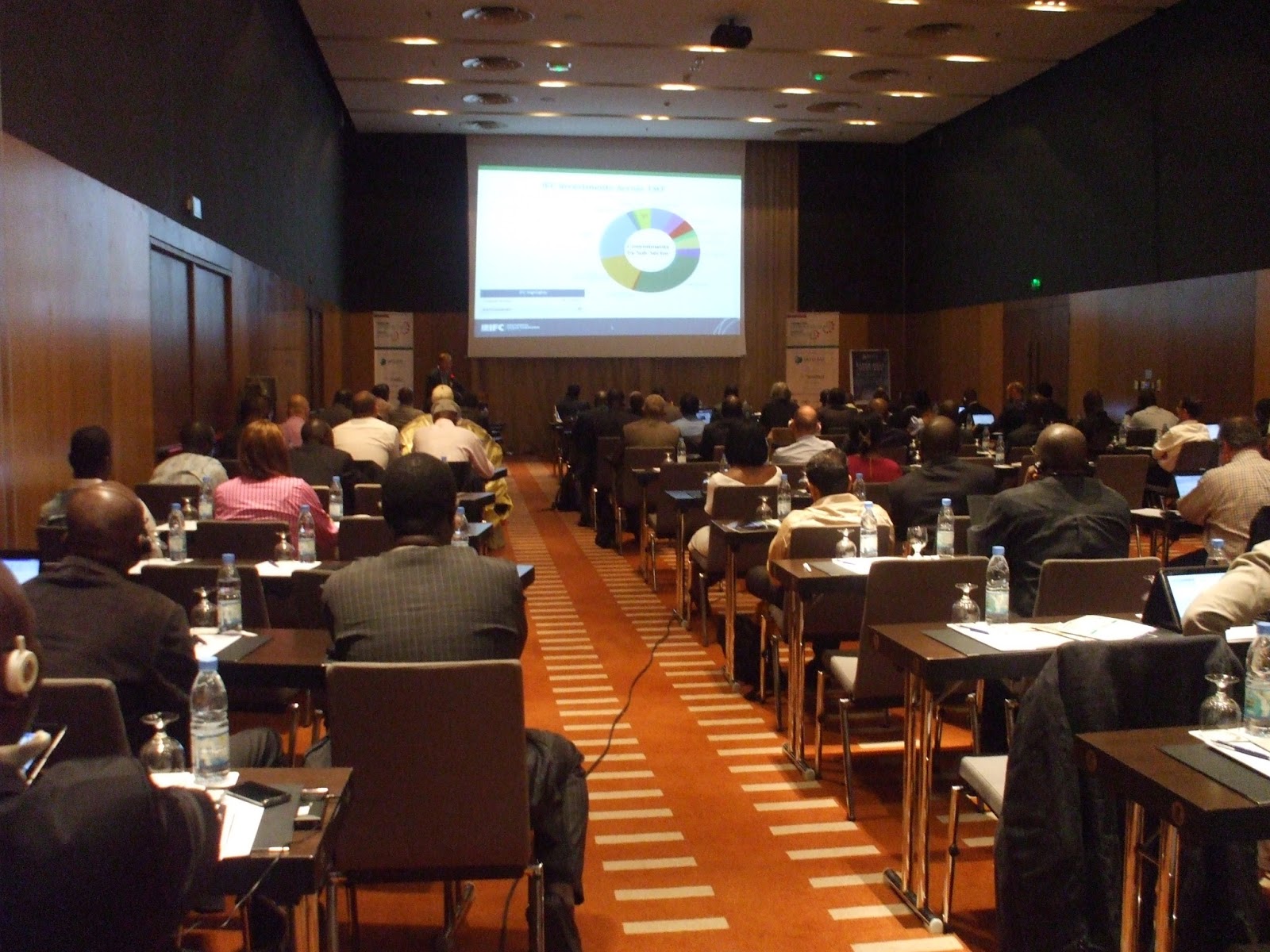
Digital Services Africa event has now shut its doors after two days of intense debates on the opportunities offered by digital services on the continent. Digital services (including mobile data, content, apps, mobile money, mobile marketing) are creating new business models and partnerships in an ecosystem that is no longer dominated solely by mobile operators. The relations between OTT players and telcos have evolved greatly in the last few years but there is still work to do to ensure partnerships are working and that revenues are shared equitably. Representatives of all parts of the digital ecosystem shared their views in lively debates during the event: OTT/content players (Google, Iroking, Spinlet, Bozza), social media (Mxit, 2Go), operators (Orange), devices specialists (Nokia, Anabel Mobile), solutions providers (Spice Africa, Jinny Software, Intersec), app developers and more.

"From the debates we heard at Digital Services Africa this year, it is clear that what we're seeing now is only the beginning of what will be a great market. There is still a lot of work to ensure the digital market grows for the benefit of all - including customers. We are proud to be able to provide a forum where market stakeholders can get together, exchange ideas and build partnerships" says Julie Rey from organisers Informa Telecoms & Media.

The event will return to Johannesburg in 2014, co-located with MVNOs Africa. This will provide more opportunities to discuss new partnerships and models to deliver attractive services to African users.

--------------------------------------
See You Next Year @ The Maslow Sandton!
--------------------------------------

Digital Services Africa 2014
24-25 June 2014
The Maslow Sandton


-----------------------------------
Thank you to our Sponsors of 2013!
-----------------------------------


25 Jun 2013

Digital Services Africa opened today at the Hilton Sandton Hotel in Johannesburg...

***Join us for day 2 *** Share your thoughts on #DigitalServicesAfrica @allaboutcom


The digital ecosystem is going through great changes in Africa: new players, new services, and new customer demand.

Digital Services Africa opened in Johannesburg today at the Hilton Sandton, providing a forum for players in the ecosystem to discuss how to make the most of it: what services will drive the market, how to monetise them, what partnerships will work best? 

The conference opened with a session on innovation and entrepreneurship, followed by a panel on partnerships between operators and new players. The afternoon sessions looked at mobile money services and digital music. The variety of companies represented among the speakers and in the audience provided great debates and networking opportunities: operators (Orange, MTN, and Vodacom), OTT players (Google, Iroking, Spinlet, and Mxit), financial services companies (Standard Bank, Pbell, Wizzit, and Zunguz), app companies (People Input, Rlabs), and solutions providers (Spice and Jinny Software). 


The debates today not only showed the great amount of innovation taking place in Africa’s digital market: they also gave an opportunity to discuss how the market is shaping up and how the different players are gearing up for the many opportunities it offers.

The second day will look more closely at content and apps, with a panel on social media (including speakers from Mxit, 2go and Google), one on content (with representatives of Bozza, DSTV, BBC and Umuntu), a session mobile marketing and the AppGig led by event partners Mobile Monday.

-------------------------------
View Day 2 of the latest agenda  
-------------------------------

Agenda:
http://bit.ly/10qC780  

------------------------------------------------
Tweet about your presence #DigitalServicesAfrica  
------------------------------------------------

Make sure to let everyone know your thoughts about the show on twitter using #DigitalServicesAfrica

--------------------------------------------------
Hear from Day 1 Attendees... 
--------------------------------------------------

“This was a very informative conference and it has given me the necessary exposure. Thanks for the opportunity.”
Abiodun Akandi, Broadband System Planning, MTN Nigeria

“Not even a million can buy this valuable information gathered at the event”
Ian Jindela, Senior reporter, Africa Business Media South Africa

“The event was well prepared and the presentations were relevant”
Amine Haddad, CEO, Actel Lebanon

-----------------------------------
Thank you to our Sponsors of 2013!  
-----------------------------------
Comza Africa
Intersec
Jinny Software
Spice

-----------------------------------------------------------
Have you joined our networking community? Here's how:  
-----------------------------------------------------------

Download Bizzabo (iPhone, Android) - http://www.bizzabo.com/download  
Search for: Digital Services Africa
Click 'Join'!  


--------------------------------------
Join us for Day 2 @ The Hilton Sandton 
--------------------------------------

Hilton Sandton
138 Rivonia Road
Sandton
South Africa 2196
Tel: +27-11-322-1888
Fax: +27-11-322-1818

Directions: http://bit.ly/12E193V  
  

24 Jun 2013

Steven Evans, CEO of Etisalat Nigeria reveals the cornerstone of their success in Nigeria ...

Steven Evans is the CEO of Etisalat Nigeria.

The Com World Series team caught up with Steven ahead of the NigeriaCom conference and exhibition, taking place at the Lagos Oriental Hotel, Lagos, Nigeria, 17-18 September to find out a bit more about his experiences and focus at the event.

Com World Series: How is your company positioned in Nigeria and what are its future objectives?

Steven Evans: When we launched commercial operations in 2008, we had one goal in mind – to turn around the telecoms industry, exceeding every Nigerian’s expectation of what a telecom organization should be. We went ahead to develop Etisalat’ s business strategy based on four strategic elements – Innovation, Quality of Service, Customer Focus and Efficiency/Value for Money.

With these core pillars The Etisalat team operate on a daily basis with an outstanding sense of Customer Centricity – this along with Innovation (in products & services) has become the major positioning of the brand.

The Etisalat brand has also enjoyed an amazing affinity with the youth market to date and has a phenomenal percentage of its base between the ages of 18 – 24. Moving forward, we intend to continue to push this affinity with innovative products and services that speak directly to our customers.

Com World Series: What do you think are the top 3 major trends that are affecting your business in the region in 2013?

Steven Evans: The top 3 trends here can only be summarised with the phrase “Data, Data and more Data”!

As voice revenues level out, data, over well designed, well deployed, well managed 3G networks, is the next frontier for telecoms in Nigeria. Market growth in this 3G era is a major focus with over 55% (nearly 8 Million) of our subscriber base being data users.

This evolving behavior means the market, our customers need data-driven propositions, tariffs, content and Apps that provide a new and exciting communications experience. Recent launches like our very popular EasyFlex tariff, an exclusive partnership with award winning music App Spinlet and collaborations with major device manufacturers for low cost smartphones all tick our brand values of Innovation & Customer Focus ensuring improved data usage on the network.

The quality of our network, and therefore our service, is the key to unlocking the potential of our base and so we have a very aggressive focus on utilising the best possible network solutions to lead in this market.

Com World Series: How are Smartphones/tablets and cloud services impacting mobile/internet service providers in Nigeria?

Steven Evans: In comparison to markets in the West, Smartphone penetration in Nigeria is relatively low at around 15%.
Key to driving the goals mentioned above will be the right device choices for our customers. We recently launched a new, low-cost Android Smartphone with Chinese device manufacturer, Techno. This move puts more and more data-enabled devices in the hands of the Nigerian Subscriber, driving our market forward.

Com World Series: What are the remaining challenges in terms of connectivity and quality of service in the region and which technologies are most likely to resolve these issues?

Steven Evans: Power is the most disruptive issue for all mobile operators in the region. The lack of a viable, existing structure for power and fixed-line telecommunications presents a huge challenge to network expansion and improvement. Moving forward, efforts must focus on feasible solutions to extend networks and manage traffic in the absence of these basic structures. Fibre, Wi-Fi and LTE will be key to reaching the market’s full potential.

Com World Series: Who are you most looking forward to meeting/hearing from and what do you hope to achieve from taking part in NigeriaCom?

Steven Evans: The concept of the event itself, bringing together the ecosystem of the Nigerian telecommunications market is an exciting one. Well done Informa! I’d have to say I am certainly looking forward to hearing from our Minister of Communications and the Regulator on how they will continue to successfully collaborate on driving this great success story. Inevitably, contributions from my operator peers will be insightful as we increasingly team-up to face some of our shared challenges. Finally, as this ecosystem expands, I’m excited to understand how we can better serve our client base with innovative partnerships on content and mobile functionality.

Find out more at NigeriaCom

Steven Evans will be leading the session “Keynote Panel Hosted by Etisalat” on Day 1 at 10:00.

Register here

18 Jun 2013

Telkom South Africa writes down assets to tune of $1.2bn

South African operator Telkom has written down the value of its assets by R12bn ($1.2bn) following a review by its board. The operator said the decision to revalue it’s assets is important in enabling it to become competitive and efficient.
“We are committed to transforming Telkom’s financial performance,” said Sipho Maseko, group CEO at Telkom who took the over from former CEO Nombulelo Moholi in April of this year after leaving Vodacom, where he was COO. “This will require bold and decisive action. Tough and urgent decisions will have to be made, particularly regarding costs and the decommissioning of unprofitable services.”
Maseko added that the operator will accelerate the upgrade of its network in the medium term, and this will be essential for improvingservice delivery, efficiency and competitiveness.
The Telkom board explained that reasons it wrote down its assets, which included the extensive time period that shares have been trading at a lower value to its net asset value (NAV) and the fact that obsolescence of some of its legacy assets.
The migration of services from legacy assets to assets that are based on new technologies which will rapidly escalate over the next few years and further reduce the returns from some of the above noted legacy assets.
The impairment charge is a non-cash item and it will not impact the firm’s cash flow, said Telkom, adding that  after the impairment, the NAV per share is circa R34.
June 13, 2013 Written by Dawinderpal Sahota


This article first appeared on telecoms.com 
News, Analysis and Opinion for the global telecoms industry
Telecoms.com is the leading provider of news and analysis, combined with in-depth features, interviews, reports and much more. The site keeps more than 80,000 unique monthly users worldwide up to date and in touch with the latest technological advancements and market trends, addressing the key business and technology issues facing the industry.
Telecoms.com provides innovative marketing solutions through different channels such as webinars, TV interviews, newsletters, print products, events and custom-made opportunities. Whether you are looking to reach Operators or Vendors our targeted marketing options and vast industry databases will ensure that your message reaches the right people.


Bharti Airtel’s acquisition of Warid Telecom could challenge MTN’s dominance in Uganda


Bharti Airtel has recently signed a definitive agreement to acquire 100% of Warid Telecom Uganda in a move that will increase its market share to about 39.3%. Through the acquisition, Airtel will strengthen its position as the second-largest mobile operator in Uganda. According to Informa Telecoms & Media research, Airtel had 4.63 million subscriptions at end-2012, while Warid Telecom had 2.82 million. MTN was the market leader, with 7.7 million subscriptions and 40.67% share.
As the deal awaits approval from the regulator before the transfer of license is granted, concerns are rife about MTN’s dominance in a market with eight operators. The launch of two networks, K2 Telecom and Sure Telecom, at the beginning of the year caused a lot of concern from the large operators, which felt that the Ugandan telecoms market was perhaps too small for so many players. Some of them even concluded that the new operators would only contribute to the poor quality of telecoms services being experienced in the market. The new merger can therefore be seen as good thing after all.
In addition to boosting its subscription base, Airtel hopes to benefit from Warid’s network infrastructure and human capital to boost its growth and profitability in Uganda. However, the acquisition should not be looked at from a Ugandan or African perspective but more from a global perspective, as a strategy to expand Airtel’s position in the world’s mobile market. Bharti Airtel is the world’s seventh-largest operator, with more than 265 million mobile subscriptions at end-2012. In January 2010, it acquired 70% of Warid Telecom Bangladesh, in a deal whose value was not disclosed. It has recently announced plans to buy out the remaining 30% in a move to consolidate its position in Asia Pacific.
Airtel’s acquisition in Uganda is the first in-market consolidation in Africa’s mobile market. It also involves a larger operator buying out a smaller one. This might just encourage larger operators, especially in sub-Saharan Africa, to follow suit, so as to improve their profitability, which has been greatly affected by the 2010 price wars that saw operators reduce their call rates.
From a Ugandan-market point of view, the acquisition will be a game changer, accelerating growth through innovative products and services and improving overall quality of service. However, it might not challenge MTN’s dominance in Uganda just yet. MTN is reportedly evaluating possible mergers with other small operators in the country. It says that the only way to bring sanity to the Ugandan telecoms market is through consolidation to at most two main operators.

Re-produced from the Informa Telecoms & Media Analyst Blog - authored by:

Danson Njue

MEA

Danson Njue

Areas of expertise: Analysis of mobile markets in Sub-Saharan Africa
“During 2013, operators in Sub-Saharan Africa will focus more on expansion of their mobile data networks to improve capacity and coverage. They will also increase their data offerings and promote smartphone adoption as a way of promoting data usage on their networks to boost service revenues. Operators will also be looking to evolve mobile-money platforms into integrated mobile financial systems capable of delivering multiple services to their customers.”
Danson Njue is a Research Analyst with Informa Telecoms & Media. He works as part of the Middle East and Africa team and has a key focus on mobile operator and vendor strategies in Sub-Saharan Africa. Danson tracks the growth of mobile and fixed telecommunication sectors as well as regulatory issues in the region. His recent research interests include mobile-broadband and mobile money strategies to grow operator service revenues in emerging markets.
Danson joined Informa Telecoms & Media in March 2011 as a Research Analyst. Prior to that, he was a Wireless Training Engineer at Huawei Technologies Limited where he conducted training on wireless Radio Access Network (RAN) technologies and offered customer support on wireless equipments. Danson has also worked as a Base Station Subsystems Engineer at Safaricom Limited where he was involved in the installation, commissioning and maintenance of radio access and transmission networks.
Danson holds a Masters degree in Telecommunication Technology and honours degree in Electrical and Electronics Engineering.

17 Jun 2013

Join the App Gig Next week @ Digital Services Africa at the Hilton Sandton!

Join Africa’s most innovative and dedicated app specialists and find out how to develop successful apps for the African market


In partnership with Mobile Monday, the AppGig is a series of dedicated workshops and interactive sessions.  Newcomers can meet with industry veterans, successful start-ups and big brands to find out about innovative business models, exciting development ideas and new trends… all this in an informal and friendly environment.

Hear from experienced and engaging speakers from the whole apps ecosystem (developers, content producers, handset manufacturers and other players), network and share your ideas with your peers in an informal setting.

Share ideas and hear top tips from:


  • Gavin Marshall, Head of Innovation, Mxit
  • Toby Kurien,  Software Developer & Android Advocate
  • Mark Strathmore, Head of Developer Ecosystem, South and East Africa, Nokia
  • Sipho Ngwenya, CTO, Afroes
  • Barry Gonin, CEO, Weather Intelligence Systems

Join the App Gig @ Digital Services Africa
25-26 June 2013 
Hilton Sandton, Johannesburg 
http://digitalafrica.comworldseries.com/


12 Jun 2013

Connecting West Africa: See you next year | 10-11 June 2014


Share your thoughts on #ConnectingWestAfrica @allaboutcom 

The Connecting West Africa conference and exhibition closed today after two days of intense debate on connectivity developments in the region. 


The main theme was that the region needs better access to high speed communications in order to deliver the new services that consumers and enterprises demand. New technologies, partnerships and investment must be promoted. More cost-efficient solutions are being developed - whether over mobile, satellite or fibre - but there is still work to be done. The role of regulators and governments was often mentioned as crucial in promoting development in the market.

Attendees had an opportunity to hear from the region's leading operators, suppliers and governmental organisations who shared their perspectives on the market: Orange, Tigo, Expresso, ECOWAS, Intelsat, O3B Networks, WIOCC, Sierratel, Equateur Telecoms and more.  


"For our 10th year in the region, we decided to focus the event on issues of connectivity and network/infrastructure developments" says Julie Rey, Conference Director, Com World Series | Informa Telecoms & Media; "this proved to be a very important theme and it was fascinating to witness the very passionate discussions both in the conference and during the networking sessions".

Next events in the Com World Series will look at other areas of the market: Digital Services Africa in Johannesburg on 25-26 June, NigeriaCom in Lagos on 17-18 September and AfricaCom in Cape Town on 12-14 November.
 
We look forward to seeing you next year at Connecting West Africa 2014. 
  
--------------------------------------------------
What our attendees said about this year's show:    
--------------------------------------------------
 

“The Connecting West Africa Conference allows you to not only connect on the issues confronting the West African telecom sector, but also connect with the companies and individuals that can help you find solutions to your needs.” 
Kolubahzizi Howard, Director of Strategy, Liberia Telecommunications Authority

“Efficiency! Efficiency! Efficiency! This event has provided an insight into the challenge for all MNO in terms of exponential growth in bandwidth demand and how to balance network efficiency and profitability. Thank you for the great opportunity!”
Ismail Ibrahim, Satellite Services Manager, MTN Nigeria

“The idea of the Speed Networking was fantastic! It gave vendors the opportunity to have one to one interaction with the operators”
Chinedu Dike, Sales Director West and Central Africa, Tecnotree Finland  


“This conference was a great advantage for us. Well informed business insights, very focused presentations. The event is well monitored”
Komenan Celestin, Group Chief Sales & Marketing Officer, Alink Telecom Cote D'Ivoire

“Very good and interesting presentations, showing good future prospects. Staff was very friendly and helpful, always ready to give a hand! I will come back!”
Francois Hernandez, Sales Director, Verimatrix Netherlands

“Great event!!! All topics were relevant and it is good to discuss the challenges facing mobile network operators! Keep up the good work!”
PJ Phike, CEO, MTN Guinea

“We really appreciate the opportunity of connecting operators to telco providers.
As a telecom operator, it will be very beneficial for us to get involved with the local vendors as we have done in Speed Networking. Presenting and working with the providers in the telecom field, will help us to continuously keep the connection between the companies. Thanks” Khadim Rassoul Diop, Field Operation Director, Expresso Senegal
 

“Today's event has been very interesting for us. There was a great amount of suppliers which we met in Speed Networking with a rich portfolio of products and solutions. The speakers and panellists were very experienced in the field” 
Ibrahima Toure, Head of Innovation Department, Orange Mali

------------------------
Thank you to all the Sponsors of Connecting West Africa 2013 
------------------------ 

Intelsat
O3B
Sonatel
TI Sparkle
Helios Towers
Ekinops
Mahindra Comviva

------------------     
See You Next Year!     
------------------     
To get involved early for the 2014 show,       
please visit our website: http://westafrica.comworldseries.com/
      
Connecting West Africa 2014 
10-11 June 2014 
Radisson Blu Hotel
Dakar, Senegal
    

11 Jun 2013

Connecting West Africa opened today at the Radisson Blu in Dakar...


***Join us for day 2 ***  Share your thoughts on #ConnectingWestAfrica @allaboutcom
 
Connecting West Africa opened today at the Radisson Blu in Dakar, Senegal, with very engaging debates on the means to improve connectivity across the West Africa region.


The key theme of the event was how to meet the networks and infrastructure needs in the digital era in the region. The conference included presentations and interactive debates with inspiring speakers from the entire digital ecosystem such as Operators (Sonatel-Orange, MTN, Tigo, Expresso, and Sierratel), OTT players (Google, Viadeo) and Satellite companies (Intelsat, O3B Networks) and much more. 
 
The discussions touched on some of the key challenges that remain in order to provide better, more reliable and more affordable communications: regulation, bandwidth cost, quality of service and cost-efficiency among others.
  

Outside the conference, the exhibition and break areas were busy with meetings and continuing discussions. Some attendees joined a busy Speed Networking session to make new contacts. The day closed with a seaside networking drinks reception sponsored by Mahindra Comviva. 
 
The second day will continue the debates around investment, partnerships, cost-efficiency and rural telecoms, with speakers from ECOWAS, IFC/World Bank, WIOCC, Orange, Helios Towers Africa, Azur Telecom, the Liberian regulator and much more.
 
------------------------------
Make sure to join us for Day 2 
------------------------------
   
There is an outstanding speaker line-up for day 2 of the event as well -  
make sure to join us tomorrow! 
 
Venue Information: http://westafrica.comworldseries.com/venue/
 
--------------------------- 
Timings:  
--------------------------- 
 
Day 2: 
Registration: Opens 8:30 
Conference: 9.30am – 15.30pm 
Exhibition: 9.00am – 15:30pm 
   
--------------------------------------------------
Hear from a Connecting West Africa Day 1 Attendee 
--------------------------------------------------
 
Nirina Rambelo, Regional Sales Manager, France and Francophone Africa, Transition Networks
 
"For my first participation as visitor I am fully satisfied. The event's concept is suited to the target market ie the telcos. The quality of attendees is of very high level: I'd say 100pc are decision makers. For us as suppliers it is very important. On the first day of the event I achieved nearly all of my objectives. We'd recommend vendors in our field to attend" 


"Pour une 1re participation en tant que visiteur je suis entierement satisfait. Le concept est adapte par rapport au marche vise (les telcos). La qualite des personnes qui viennent rst de tres hautniveau; a 100pc ce sont des decideurs. Pour nous en tant que constructeur c'est tres important. Meme le 1er jour j'ai acheve presque tous mes objectifs. Nous recommandons aux constructeurs dans notre domaine d'etre presents".

 
------------------------ 
Sponsors of Connecting West Africa 
------------------------  
 
Intelsat
O3B
Sonatel
TI Sparkle
Helios Towers 
Ekinops 
Mahindra Comviva 

10 Jun 2013

IPX to Stop the Many, Many, Many, Many Network Interconnect Chaos


Dialogic is exhibiting at Connecting West Africa, taking place at the Radisson Blu Hotel in Dakar, Senegal tomorrow and Wednesday 11th of June.

Jim Machi is the Vice President of Product Management at Dialogic. Today he shares his views on Network Interconnect Chaos.

A while back, I spoke at the US Telecom “Voice Innovation Summit”. I was placed in the part of the conference titled “From POTS to Communication Free-For-all”. My point of view is that even though yes, there are many, many, many, many, many, many, many, many different types of IP Networks, it really doesn’t have to be a free-for-all. First of all, connectivity is happening today, so it’s fine in a certain respect. But it can clearly get better, and if you are running a business and need to connect from one country to another, IPX is one such framework to stop the chaos.

This blog is not going to be a treatise on IPX and if you want to learn more about it, please read our whitepaper here.

What I spoke about is that because of different types of signaling on IP networks (because of SIP variants for instance) and because of different types of media for the IP networks (different voice and video codecs), and that fact that the IP networks still need to connect to the PSTN, you get into a need to translate all of these things when crossing network boundaries. This is no different than before, and why gateways exist. However, in the IP centric world, this is why Session Border Controllers exist.

But carriers don’t want to run their services over the public internet. There isn’t any control over the quality, nor the security. So the IPX framework deals with this. It’s essentially a very large private IP network. So if you are IPX enabled, then as you cross network boundaries the signaling and media conversion is taken care of, and the security as well. One can join and participate just as a pipe (called bilateral transport), or be service aware and charge for minutes for instance (called bilateral service transport) or be a multilateral service hub, which is where the QoS and this differentiated, premium services can live.

I then gave some examples of different networks and their needs when crossing boundaries, such as fixed networks to mobile networks (even if both are IP), etc.

If one thinks of the IPX as a big “cloud” then you can put IPX aware equipment in there that can accommodate transcoding, etc. I gave an example of a live press conference demo we did at the past CTIA – where we demonstrated mobile video conferencing on the Verizon network where we had a few people on the LTE network in New Orleans, one on the 3G network in Times Square, one on a WiFi network and one on a wired IP network, all with differing endpoints. It worked. But imagine if we had tried this from different countries! No way at this time. But if IPX was in place, it definitely could have worked.

So in summary, if you don’t know about IPX and want to learn more, go read something J But IPX is a mechanism that can provide for internetworking with IP and legacy networks, can be a platform for enabling value added offerings that enhance the user experience, and can be a common platform for cost efficient optimal global routing of IP traffic. A way to end pending chaos.

Find out more; meet Dialogic at Connecting West Africa, visit Stand 15. Visit the website: www.comworldseries.com/westafrica

7 Jun 2013

Jim Machi, Dialogic on software based session border controllers

Dialogic is exhibiting at Connecting West Africa, taking place at the Radisson Blu Hotel in Dakar, Senegal on Tuesday the 11th of June.

Jim Machi is the Vice President of Product Management at Dialogic. Today he shares his views on software based session border controllers.

Why would you want a software based session border controller?   

Why would you ever want a software-based session border controller (SBC)?  Is it even feasible? Right now, SBC’s are boxes that often implemented at the edges of IP-based networks.  It might seem unlikely for a hardware node of that critical network element morph to become a piece of software.

If the SBC sits on the border of two IP networks, then there are IP connections on both sides of the box, while means there is a physical connection to an IP network.  However, that physical connection doesn’t have to be at the exact demarcation point.  In fact, it doesn’t have to be part of the SBC box. Some other device could take care of the physical IP connection, and the IP data stream could then pass through a software-based SBC function that resides elsewhere. For example, a software-based SBC could be a resident in a commercial off-the-shelf (COTS) type chassis, such as an ATCA chassis, where network interface cards (NIC) handle the connection to the IP network. A series of single board computers could go into the chassis where the software based elements could run as an application. The software-based SBC could simply be connected and running on one of the single board computers. It could be running in a virtualized environment in a single board computer, or as part of a few applications in a 1U or 2U platform. Ultimately, it could also be in a cloud environment.  In this case, the actual physical NIC could be thousands of miles away from the SBC software.


Now that we’ve deemed it feasible, why would someone want to use a software-based SBC? First of all, economics come into play. COTS hardware can enter the picture, and when that happens, costs for that product set typically come down. A related piece to this reasoning is savings on the chassis. If you put the SBC on a single board computer that goes into a common chassis with multiple other network notes, also on single board computers, then there is savings on the chassis.   There would also clearly be sparing savings, since the COTS components are less expensive, and they would be more commonly available, obviating the need to as much on-site sparing. 

Software based SBCs are also a great way to get started if you think you need one. If you don’t know how many sessions you need, then you can get started using this and scale it up relatively easily. And it may be more economically viable for your situation if you need to scale as you go. 

Additionally, you can add more resources to the SBC easily. At Dialogic, we believe strongly that media and multimedia transcoding will be required for the SBC, and not because that is a strength of ours. We believe in that because if you buy into the notion that an SBC is basically an IP-IP gateway, then it will be obvious that transcoding would be required since transcoding is required in a TDM-IP gateway.  It’s simple if you think about it from that perspective. 

Let’s get more specific now. From a service provider perspective, costs and CAPEX are clearly important and we covered some of that above from the perspective of using COTS hardware. However, another consideration of using COTS hardware is some hardware (the base chassis say) will go away as part of using a software-based network node, and then CAPEX will go down. This is clearly a driver as well for a movement to software based elements. 

Another important consideration though is that service velocity is increasing. New services are being rolled out quicker. Agility with respect to the network elements are required to be able to meet these needs. Software-based network elements enable this agility because of what I said above – ease of scalability and ease of adding newer functions such as transcoding.  It’s likely that the needs of the SBC will continue to evolve over time. With transcoding right now, we see the needs to transcode HD Voice codecs to the more “regular” codecs. But in the future I’m sure we’ll see video transcoding needed as well. Even if you feel video transcoding is covered now, what about when the H.265 video codec comes out in a year? Will you need to buy a new SBC to cover that?  Or can you upgrade a piece of software?

And what about when WebRTC enters the scene? There is transcoding required there as well because the WebRTC audio and video codecs are different than utilized in the networks today. But there is also a signaling conversion required as the HTTP to SIP signaling conversion needs to occur. Having a piece of software to upgrade would also enable this support much easier. Transcoding and WebRTC are just two ideas that come to mind right now. What is the future to hold in this regard? Yes, you know that there will be a lot more!

For enterprises, software-based SBCs offer many of the same benefits as above, especially as it relates to WebRTC since I would expect WebRTC to enter the enterprise first. Integration of enterprise apps, whether WebRTC apps or not, could be a big differentiator with a software based SBC. And a software-based SBC, with its ability to scale down, offers a cost effective alternative for enterprises that don’t have one today, because the SBCs on the market are either too expensive for them or because the ones on the market today offer “too much” in terms of session capability. 

So you can see why a software-based SBC is convenient. But can it do what the hardware based SBC’s can do? Obviously, that is dependent on your supplier, but there is no reason that the software based and hardware based SBC cannot handle the same functions. There might be hardware assist in a hardware based SBC, but this would be to enable higher densities or more sessions, but shouldn’t be there to add features. At Dialogic, this is what we believe anyway. Almost 13 years ago Dialogic really drove the concept of Host Media Processing as an alternative to the Computer Telephony Integration (CTI) boards that drove Dialogic’s early years.  We know what is possible as the technology transitions to software.  And we know that you don’t have to lose functionality in this transition. We are experts in this “software-ization” of hardware and have applied this mantra to our software based SBC.

Software based SBCs have entered the industry discussion, because there are use cases where they make sense. If you are considering using one, or want to talk more about this, let us know.
Find out more; meet Dialogic at Connecting West Africa, visit Stand 15. Visit the website: www.comworldseries.com/westafrica